




UV-C on the return line. No chemicals in the water.
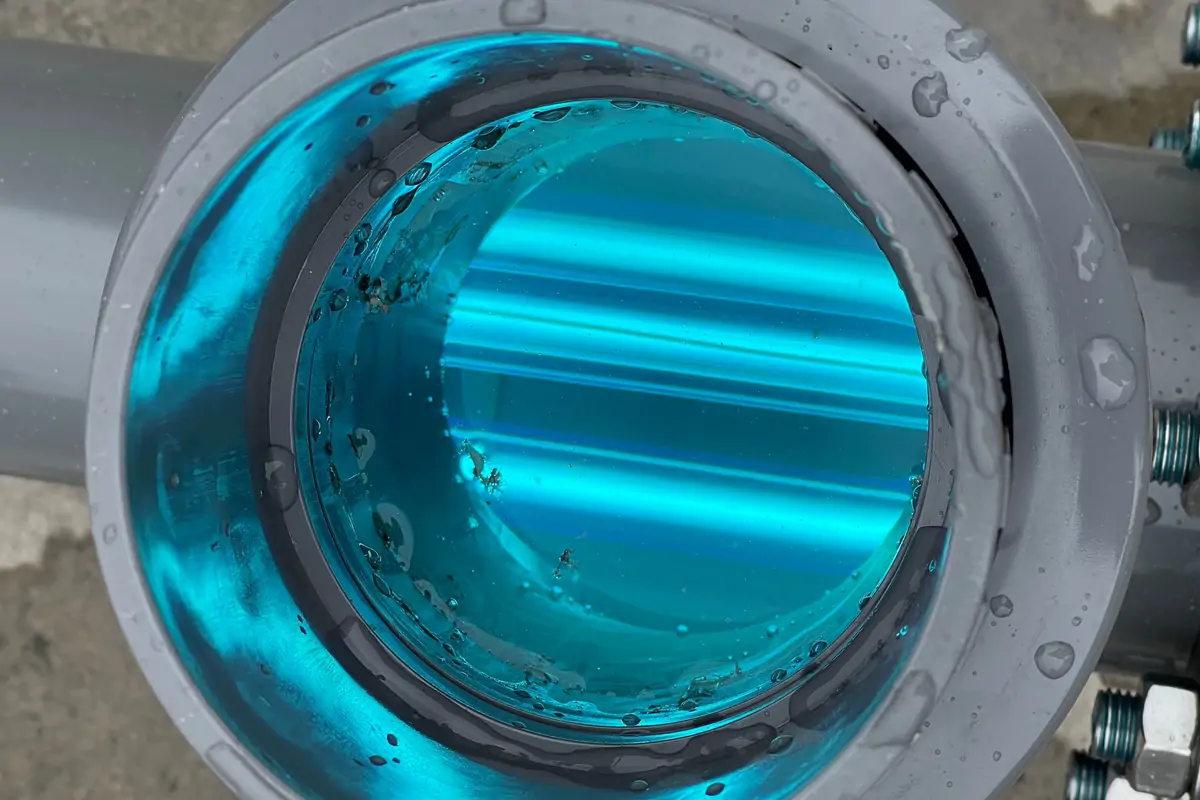
UV-C light inactivates bacteria and other pathogens as water passes the lamps. Below: what sets the dose, why clear water matters, and what to check as lamps age.
lamps
housing, fresh and seawater
in our factory
standard units ship
Treats what passes the lamps. Nothing else.
UV-C light damages the genetic material of bacteria, viruses and parasites in the water so they cannot multiply. It adds nothing to the water and leaves no residue. That also means it only treats the water flowing past the lamps at that moment.
- pathogens in the water flowTreats:
- fish already infected, or pathogens on tank walls and biofilter mediaDoes not treat:
- organics, colour or solids. Filters and, where needed, ozone with a skimmer do that.Does not remove:
Dose is light × time, after the water takes its share.
UV dose is given in mJ/cm². It depends on lamp output, how long the water stays in the chamber, and how much light the water itself absorbs. Different pathogens need different doses.
4.5-log kill of in a lab test with UVC-LEDAeromonas salmonicida
24 mJ/cm²
Some organisms, including some viruses and parasites, need far higher doses than bacteria. Tell us the pathogens you are worried about and we size the dose for them.
Flow, water clarity, target dose.
Two UV units with the same lamp power can deliver very different doses in different water. These are the numbers that decide it.
Flow through it
Higher flow means less time in front of the lamps, so a lower dose. UV is sized on the peak flow it will carry.
وضوح الماء (UVT)
UV transmittance is how much UV light gets through the water. Fine solids, colour and dissolved organics absorb it, which lowers the dose.
Target dose
Set by the pathogens you want to control, with margin for the lamps losing output with age.
Full flow or side stream
Treating the full return flow protects every tank. A side stream treats part of it each pass and costs less.
Clear water first
Particles shield pathogens from UV light (). That is why UV sits after the drum filter, and why systems with high colour gain the most from ozone ahead of UV: in a USDA study, ozone also raised the water’s UV transmittance ().Aquaculture International, 2018USDA ARS
Dose falls slowly. Check it on a schedule.
A UV unit can look the same on the day it stops working well. Lamps age, sleeves foul and water clarity changes, all without a visible sign.
Lamp ageing
Lamps lose UV output with running hours, while still glowing
Running hours against the lamp’s rated life; replace on schedule
Fouled quartz sleeve
Scale and biofilm block light before it reaches the water
Sleeve condition; clean as the manual says
Water clarity worse
More UV absorbed by the water, lower dose
Solids removal; colour; UV transmittance if you measure it
Flow above design
Less contact time, lower dose
Flow through the unit against its rating
Lamp failure
No treatment from that lamp
Lamp status indicators or alarms
They do different jobs.
Main job
Inactivates pathogens in the flow
Oxidises organics and colour
Adds to water
Nothing
Ozone, dosed and controlled
Typical position
Return line before tanks
Side stream, with a skimmer
الاستخدام النموذجي
Most RAS
Dense, marine and shrimp systems
Many systems use both. Ozone ahead of UV clears colour, so the UV works better.
UV sized on your water, not just your flow.
A UV unit sized on flow alone can under-dose in coloured water. We size it with the solids removal ahead of it and the pathogens you need to control.
Made in our factory
UV sterilizers are made in our 12,000 m² factory in Boluo, Huizhou.
Fresh and seawater
UPVC housing for freshwater and seawater.
Sized on dose
Flow, water clarity and target pathogens, with lamp ageing allowed for.
15 days
Standard units ship in 15 days. 220, 380 or 110 V.
Standard specification.
Lamp
UV-C
الغلاف
UPVC
الماء
Fresh and seawater
الموقع
Return line, after solids removal
Dose, lamp power, lamp life
Confirmed per model
Voltage
220, 380 or 110 V
مدة التنفيذ
Standard units 15 days
Model flow, lamp count, power and connections are listed in the datasheet. We confirm the model against your flow and water before quoting.
Lamps lose output with running hours before they stop glowing. Replace them at the interval in the datasheet for the lamp fitted, not when they fail.
It depends on the pathogens. Published references range from about 25 mJ/cm² as a regulatory minimum to 70–80 mJ/cm² in a salmon RAS study, and some viruses and parasites need more. We size on your target.
UV treats the water passing the lamps. The biofilter bacteria live on the media, not in the water flow.
Yes. Our UV sterilizers use UPVC housing.
Full flow protects every tank on each pass. A side stream costs less but treats only part of the water each pass. Disease risk and budget decide it.
Check lamp hours, sleeve fouling, water clarity and flow. Most under-dosing comes from one of these.
Yes. Send your flow rate and pipe size.
UV for pathogens, ozone for organics and colour. Many systems use both.
Send your flow and water. We size the UV.
Peak return flow, species, salinity and the pathogens you want to control.
- Sized on dose, not just flow
- Fresh and seawater housing
- Made in our factory
- Standard units ship in 15 days