

Small fish, tight margins.
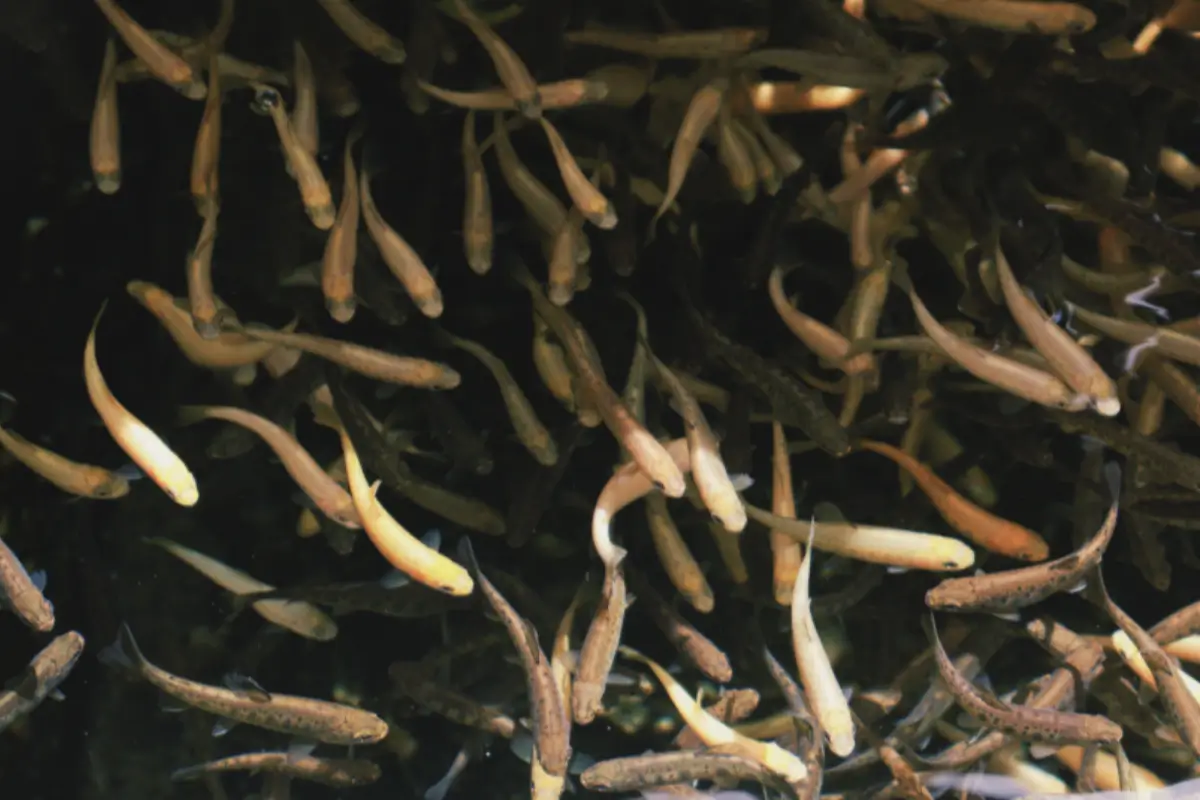
Larvae and fry react fast to changes in water quality, and they eat far more for their weight than grow-out fish. A hatchery system uses smaller tanks, separate loops and strong disinfection. Our Japan eel nursery is one example.
eel nursery delivered, Japan
in that nursery
of body weight fed daily to fry (tilapia)
loops per stage
Small fish eat far more for their weight.
Published feeding rates for tank-cultured tilapia show the pattern most species follow: newly hatched fry are fed 15–20% of their body weight a day; fish over 150 g are fed 1.5–3% (). Per kilogram of fish, a nursery puts much more feed, and so much more ammonia, into the water.SRAC Publication 282
Post-hatch to 0.5 g
20–15
0.5–5 g
15–10
5–18 g
10–5
18–75 g
5–3
75–150 g
3–1.5
150 g to market
3–1.5
So a nursery is sized on feed, like a grow-out farm. Sizing it on its small biomass gives a biofilter far too small.
A separate loop for each stage.
Each stage has different tanks, flow and risk. Eel farming shows it clearly: glass eels start in small 3–4 m² quarantine tanks at 10–15 kg/m², and move to larger tanks only once they reach about 5 g ().FAO, European eel culture
- own loop; the most valuable fish on the farmالأسماك الأم
- small tanks, gentle flow, fine solids removalLarvae and fry
- larger tanks; grading; feeds the grow-outالحضانة
- new stock kept apart before it joins any loopQuarantine
What changes from a grow-out system.
الأحواض
Smaller, easy to reach
Handling, grading and cleaning every day
التدفق
Gentle; inlets adjustable
Cleans the tank without exhausting small fish
الشاشات
Fine, on drains and outlets
Larvae and fry must not leave with the water
المواد الصلبة
Fine particles removed
Small fish are more sensitive to fines
درجة الحرارة
Tightly controlled
Small water volumes change temperature fast
التطهير
UV on each loop
Valuable stock; disease spreads fast in shared water
Nursery output matched to grow-out.
When a farm runs its own nursery, the two are sized together.
Grow-out stocking plan
How many fish, at what size, how often.
Nursery output
Number and size of fish the nursery must deliver per batch.
Nursery tanks
Volume and number of tanks for that output, with room to grade.
Nursery loop
Biofilter and oxygen on the nursery’s peak feed, not its biomass.
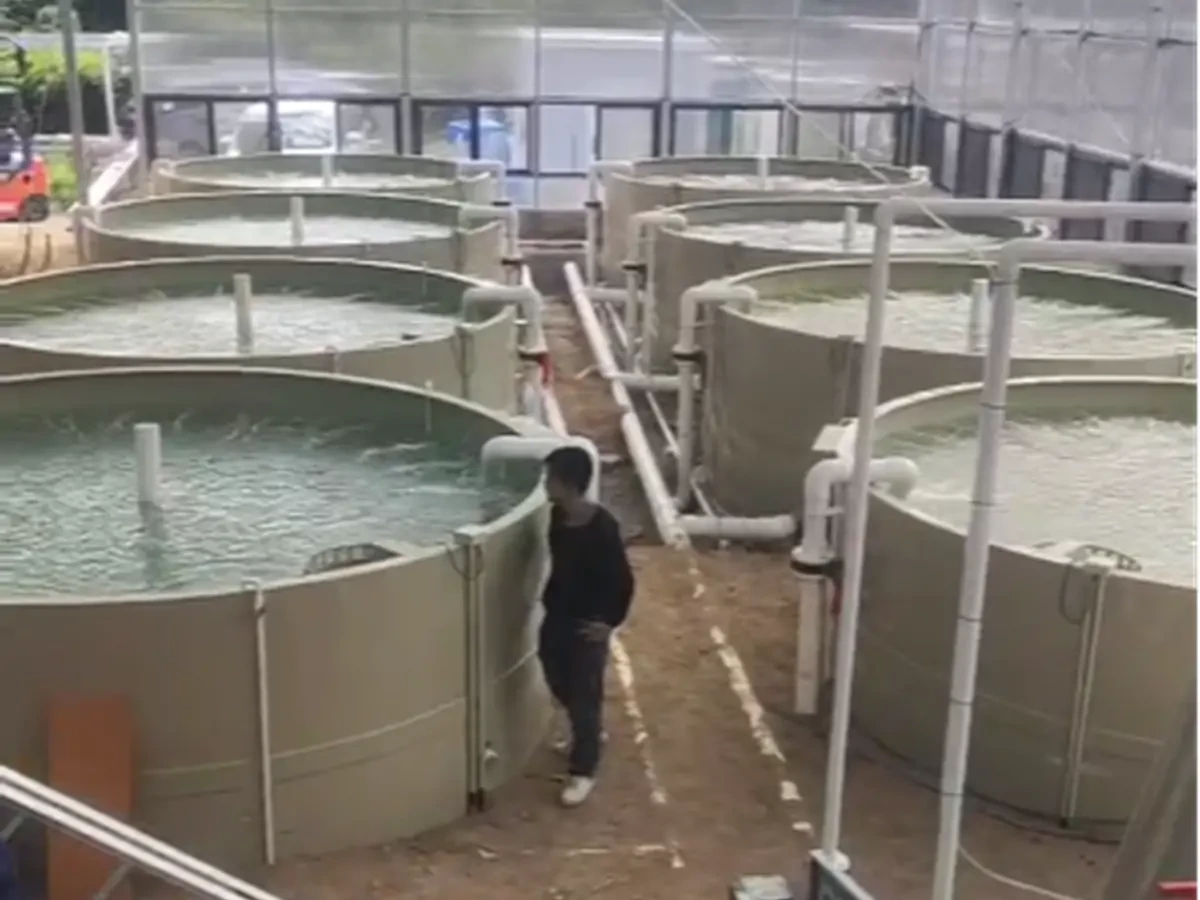
An indoor eel nursery, delivered.
Our Japan project is a 240 m³ eel nursery with 11 tanks, fitted into a building that could not be dug.
- nursery240 م³
- indoors11 tanks
- in the buildingNo excavation
When a nursery goes wrong.
Ammonia high soon after stocking
Biofilter sized on biomass, not feed
Feed vs biofilter design
Fry tired, crowding the edges
Flow too strong
Inlet flow and direction
Fish lost through the drain
Screen too coarse or damaged
Drain screens
Losses spread between batches
Shared water, no quarantine
Separate loops; UV
Uneven growth
Grading too infrequent
Grading plan; tank count
Hatchery tanks and loops from one supplier.
Hatchery tanks
Part of our tank range, made in our factory.
Nursery delivered
An eel nursery in Japan.
Nursery and grow-out
Designed together, so output matches stocking.
UV made in-house
UV sterilizers from our own factory, on each loop.
Eel projects we delivered.
The Japan nursery and the Shaxian eel upgrade.
11 tanks inside a building that could not be dug
Yes. Hatchery tanks are part of our tank range.
On peak daily feed. Small fish are fed a much larger share of their weight; published tilapia rates run from 15–20% a day for fry to 1.5–3% for fish over 150 g.
Each stage has different flow and risk. Separate loops stop a disease in one stage reaching the others.
Yes. We can design both, sized so nursery output matches grow-out stocking.
Send the species and stages. Our delivered nursery is for eel.
We design the tanks and water treatment. Spawning methods and protocols come from your hatchery team or advisor.
Send species and stages. Get a hatchery layout.
Species, stages, output per batch and the building. A first layout comes back in 3 days, free.
- Layout, equipment list and flow balance
- Sized on your species and feed
- Made in our 12,000 m² factory
- No obligation to order