



Cold water, high oxygen, low CO₂.
Trout and salmon need cold, clean, oxygen-rich water, and they tolerate far less CO₂ and nitrite than tilapia or bass. We have an engineering design for them. We have not delivered a trout or salmon farm yet, and we say so up front.
no salmonid farm delivered
CO₂ design target cited
cooling or chilling
smaller screen mesh
We have not delivered a farm for this species yet. The design below is an engineering basis built from published research, and we say so in every proposal.Sample design.
Salmonids set the strictest numbers.
A Norwegian salmon research RAS was designed to hold, at maximum feed load, CO₂ below 10 mg/L, total ammonia nitrogen below 0.7–1 mg/L and nitrite-N below 0.1 mg/L (; abstract). A salmon research RAS in Norway ran at 11.5–12.5 °C and above 85% oxygen saturation ().Terjesen et al., Aquacultural Engineering, 2013Mota et al., Frontiers in Animal Science, 2022
Carbon dioxide
Below 10 mg/L
Below 40 mg/L
Total ammonia nitrogen
Below 0.7–1 mg/L
Un-ionized ammonia below 1.0 mg/L
نيتريت-ن
Below 0.1 mg/L
Below 5 mg/L with low chloride
الأكسجين
Above 85% saturation
5.0–7.5 mg/L
درجة الحرارة
About 12 °C in the salmon research RAS
27–29 °C
These are research design targets, not a single industry standard. We confirm the targets for your strain and stage with your hatchery or advisor.
More degassing, more oxygen, finer filtration.
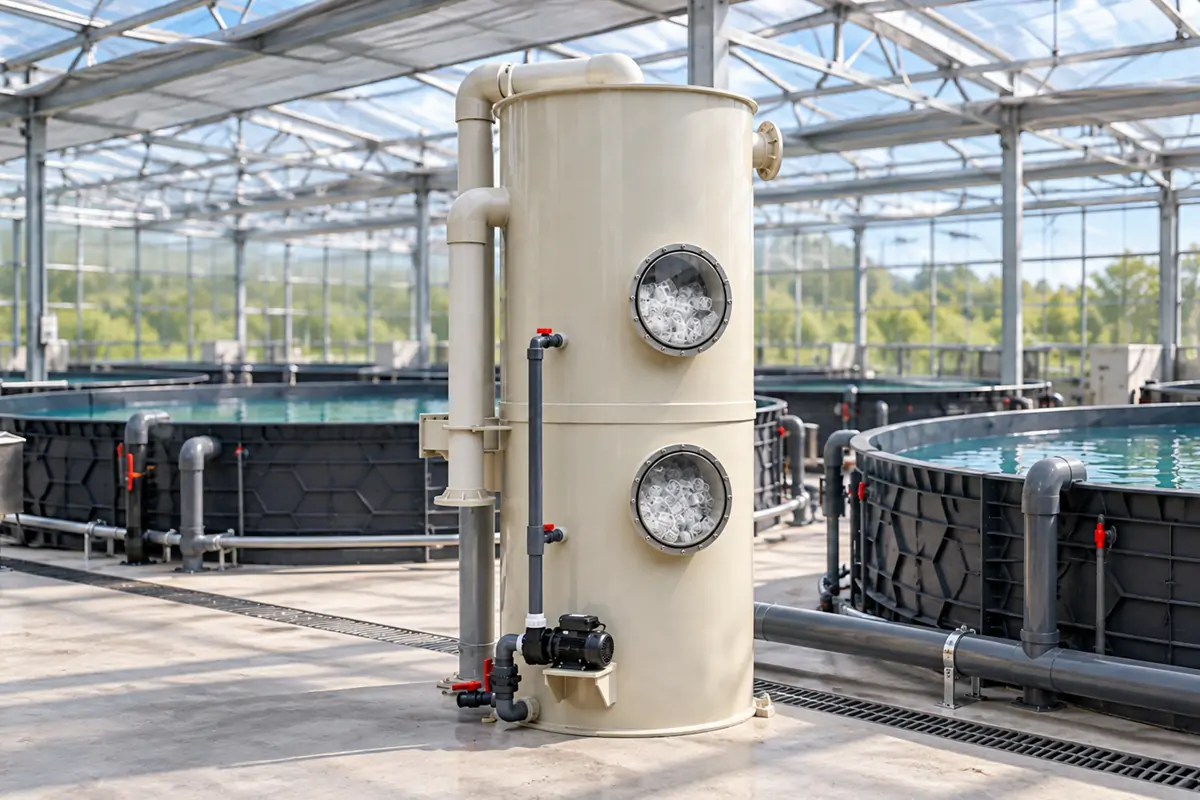
Holding CO₂ under 10 mg/L takes far more degassing air than a tilapia farm needs. Cold water holds more oxygen but salmonids need more of it. And tighter nitrite limits mean a biofilter sized with more margin.
- sized for a much lower CO₂ targetبرج إزالة الغازات
- pure oxygen with standby, on peak feedالأكسجين
- extra margin for the nitrite limitالمرشح البيولوجي
- chilling or cold source water in warm climatesCooling
Salmonid research is where the filtration numbers come from.
Much of the published RAS solids research was done with rainbow trout. We use it directly in a salmonid design.
Dual-drain round tanks with trout at 60 kg/m³: bottom-drain water carried 19.6 mg/L TSS against 1.5 mg/L at the side wall
In a 2025 trout trial, adding foam fractionation gave the clearest water; swirl separator plus drum filter removed the most organic matter
A salmon research RAS used a 40 μm drum screen, finer than our 74 μm standard
Trout, smolt and post-smolt.
Rainbow trout grow-out
مياه عذبة
Cold water and CO₂ control
Salmon smolt
مياه عذبة
Strict CO₂ and nitrite; photoperiod control
Salmon post-smolt
Brackish or seawater
Seawater materials; protein skimming; slower biofilter start-up
For brackish and seawater, see the marine design notes.
Equipment we build, a design we are open about.
Honest about experience
No salmonid farm delivered yet. We say so in every proposal.
Made in our factory
Tanks, drum filters, MBBR, degassing towers and UV.
Assumptions listed
Every target and assumption in writing, for your advisor to check.
15 delivered projects
In other species, on the same treatment loop.
No. This page is a sample design. Our delivered farms are tilapia, bass, shrimp, eel, mandarin fish, perch and grass carp.
Yes. We work from published criteria and tell you which assumptions need confirming with your hatchery or advisor.
A Norwegian research RAS was designed for below 10 mg/L at maximum feed load. That is a quarter of the published tilapia limit, so degassing is much larger.
Degassing, oxygen and cooling, followed by solids removal and disinfection.
For salmonids, a finer screen is often used. One salmon research RAS used 40 μm. We size the drum for the finer mesh.
Yes, as an engineering basis. Materials, skimming and biofilter start-up change in seawater.
Send your plan. We share the sample design and its assumptions.
Send species, target output and site size. A first layout comes back in 3 days, free.
- Clear about what is not yet delivered
- Layout and equipment list
- Flow and oxygen balance
- No obligation to order